A sign of more welcoming journeys: Busways pilots Auslan training
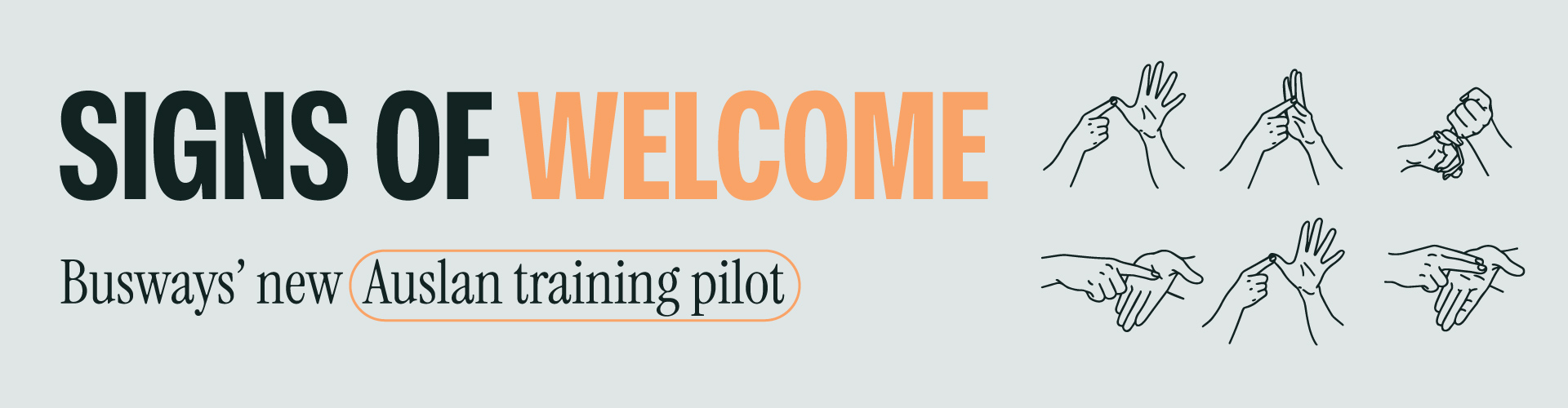
Busways is piloting Auslan training to help employees build practical communication skills and support more welcoming journeys for passengers who sign.
Highlighted during National Week of Deaf People, held from 21 to 27 September, the Signs of Welcome pilot demonstrates how employee training can help improve the passenger experience.
Employees who train drivers, support customers, respond to feedback and promote bus services are undertaking introductory training with Deaf Connect. Their learning will help inform future training for bus drivers and other customer-facing employees..
Employees who train drivers, support customers, respond to feedback and promote bus services are undertaking introductory training with Deaf Connect. Their learning will help inform future training for bus drivers and other customer-facing employees.
The initiative is advancing the objectives of Busways’ Accessible Transport Action Plan, providing inclusive customer service and support.
Learning from everyday interactions
Building on the successful launch of Busways’ Hidden Disabilities Sunflower initiative in 2024, the Busways Signs of Welcome Auslan training pilot is another step towards helping our teams recognise and respond to passengers’ different needs.
Together, these initiatives support greater awareness and more inclusive customer service.
For passengers who use Auslan, a familiar greeting or an offer of help can make an interaction more welcoming. For employees, learning basic signs can build confidence and reduce communication barriers.
Building practical skills across our teams
The pilot focuses on introductory Auslan skills, including signs such as “hello”, “help”, “yes”, “no” and “thank you” and more. These basic signs are a starting point for supporting everyday exchanges with passengers who use Auslan.
Busways Director of Corporate Affairs and Customer Experience, Donna Frith, said the initiative focused on the everyday interactions that shape a passenger’s journey.
“Accessibility is experienced in everyday moments – when someone needs information or asks for help and wants to feel confident that they will be understood,” Ms Frith said.
“As an operator, our role is to listen to passengers, turn that insight into practical improvements and equip our people to deliver them,” Ms Frith said
Supporting more inclusive journeys
Busways’ Adelaide Relief Driver Development Officer, Sally Peach, has only just started the training but can already see the benefits.
“A passenger who uses sign needed to get to the train station from the City Bay Run, and I was able to sign that my bus was going to the train station. It was really rewarding to be able to use what I’d learned.” Busways’ team will be trying out the new communication skills at the SA Disability and Lifestyle Expo in October.
Accessibility is about more than physical access. It also includes clear information and customer service that responds to different communication needs. Building employees’ skills is one way Busways is working towards a more inclusive experience across its services.
Busways employees will also have an opportunity to use their new communication skills at South Australia’s Disability, Ageing and Lifestyle Expo on 15 and 16 October, with a bus on display and a public transport information stall.