Chris Wolf - Forty years building capability through change
At moments of major change, organisations are tested not by ambition, but by capability. The transition to zero-emission buses is one of the most complex shifts the Australian bus industry has faced — reshaping fleets, depots, safety systems, workforce skills, and the way operations run every day.
As Busways’ Director of Assets and Director of Safety, Chris Wolf sits at the centre of some of the company’s most complex work, leading the teams responsible for fleet procurement, maintenance standards, depot development, property strategy, and zero-emission integration.
While the technology may be new, the challenge is familiar. Over four decades, Chris has helped steer Busways through some of the biggest shifts the industry has seen such as moving from a farebox revenue model to price-based service contracts and from small depots to a growing national footprint. Today, his focus is clear. Getting the zero-emission transition right, on the ground, in workshops, and in depots that still need to run on time every day.
Busways was one of the earliest operators to trial zero-emission buses in Australia, beginning in 2019. Chris describes the journey as one of the steepest learning curves of his career. It has forced new thinking across fleet planning, infrastructure, maintenance, and operations. “It’s not just about buying buses,” he says. “It changes how you design depots, how you train people, how you schedule work. It reshapes the whole system.”
By 2027, Busways’ will achieve 100% electrification of one it’s depot that will power over 100 electric buses. It is a milestone Chris is proud of, but he is quick to point out that success depends on staying adaptable. “You can’t fight change,” he says. “It’s coming anyway. The job is figuring out how to adapt the business so people can succeed through it.”
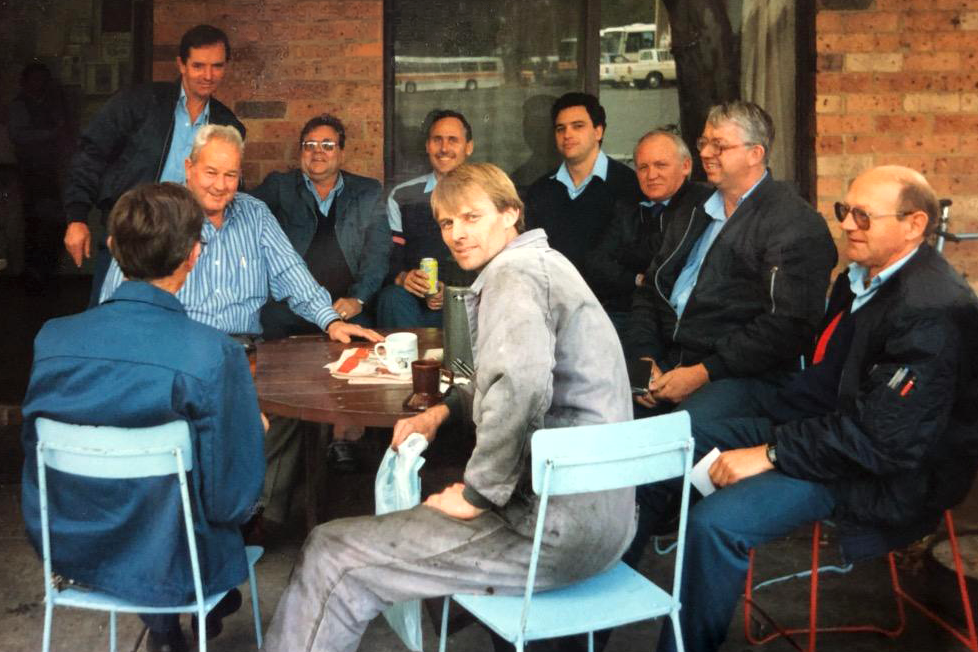
That mindset did not come from a textbook. It came from the experience of over four decades, that started by working on the workshop floor in 1979.
Chris joined Busways Campbelltown (called Campbelltown Transit at that time) as a mechanical apprentice. He didn’t have a long-term plan, he just knew he didn’t want to stay in school, and he liked pulling things apart to understand how they worked. “It was the only job I applied for,” he says.
One of the first things that struck him was the workshop itself. While most workshops of that era operated on dirt floors, Busways’ workshop had painted concrete floors, proper pits, and modern equipment for the time. Busways founder, Dick Rowe, had invested in building a truly world-class depot. "I think that mindset still runs through the company, even today," Chris reflects. "We aim to build for the future and invest in technology and our people's growth."
The work in those early years was demanding. The fleet included Leylands and Bedfords that demanded constant attention. Oil leaks were common, and engines were rebuilt more frequently than today. Gearboxes were hauled out by hand, sometimes "with a rope around your neck," Chris recalls. Apprentices learned everything - mechanical repairs, panel work, upholstery – not as generalists, but as problem-solvers. The variety shaped him, giving him a deep, practical understanding of how buses work, understanding the system, not just components.
By his early twenties, Chris was given a chance to run the Campbelltown workshop, with four mechanics, two apprentices, 40 buses. Later, he was sent to manage the larger Blacktown depot, then moved to Busways’ National Support Office at Pymble in the mid-90s. As the business grew, so did his responsibility, eventually overseeing assets across the entire Busways network.
The journey from workshop floor to office wasn't easy. "At first, you feel like a fish out of water," he admits. “You’re used to fixing problems quickly on the floor. Suddenly you’re in meetings discussing those very problems.” That grounded perspective helped him advocate for the people closest to the work. Patience was integral to his approach. “If you lose your head, nothing good comes from it,” he said.
When asked about mentors, Chris doesn't hesitate. "Two people have played an important role in my journey, in different ways." Former Head of Assets, Michael Hallak, taught him how to motivate people through difficult projects they didn't think were possible. Owner and Director, Richard Rowe, showed him the power of accepting failure as a learning tool and prioritising people development over bottom-line dollars.
“Busways core values include finding better ways and being real, not perfect," Chris explains. “I like the particular phrase - we trial, test, and evolve in our pursuit of being better."
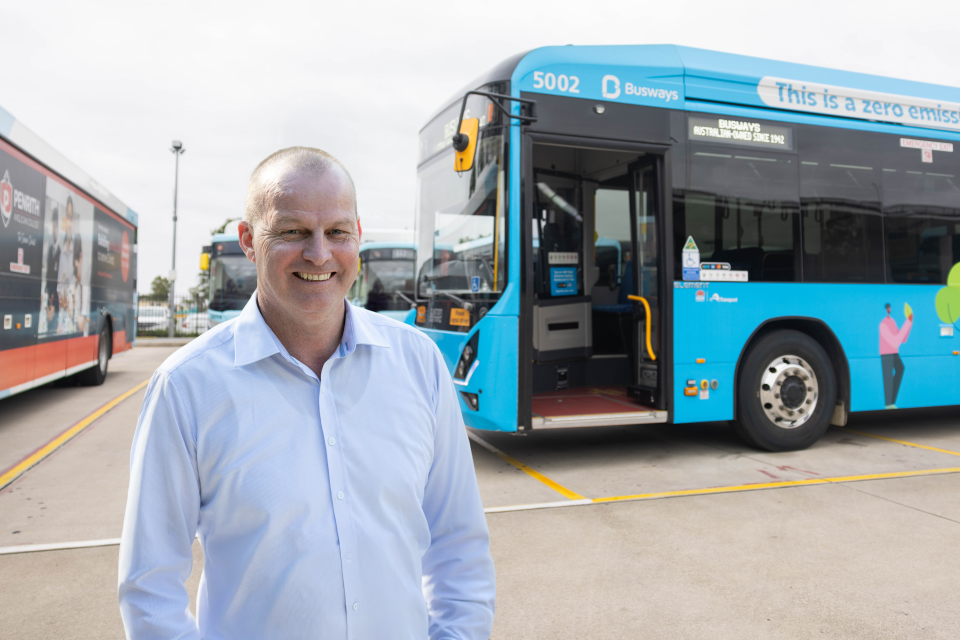
Chris describes his management style as patient and analytical. But there's something deeper, an ability to read people, to sense discomfort or dishonesty in meetings, to question tactfully until someone realises they are in over their head. "It's the mechanic's mindset," he explains. "You diagnose complex faults, pull things apart in sequence, put them back together. It's just problem-solving. That applies to everything."
Chris remembers a friend once asking him, "How did you manage to stay at the same place for so long? Don't you feel stagnant or bored?" He thought for a while before answering. "The company I work for has been the same, but the roles, the responsibilities, and the work have evolved so many times. I haven't just progressed, I have learned. There's always a new challenge, and I love that people here share the same values as me. The passion that people have here is incredible."
But more than adaptability, it's the culture that has kept him at Busways. "I have always felt supported," Chris reflects.
As challenges continue to evolve, Chris remains focused on steering Busways’ zero emission transition and building capability up through the teams behind him. From a 16-year-old who liked pulling things apart to a senior leader shaping zero emission transport, the mindset remains: stay calm, solve problems, and keep learning.